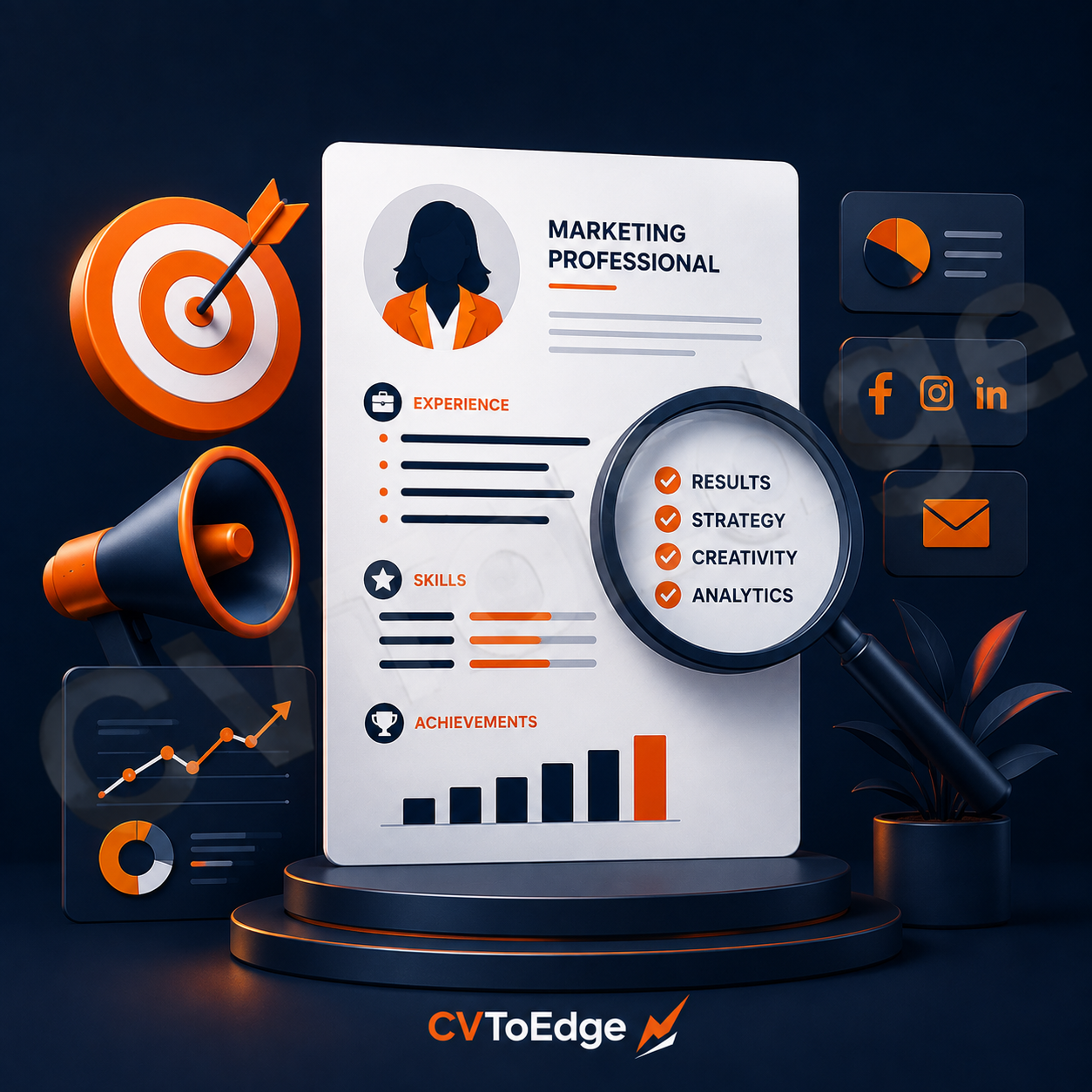
The best creative CVs balance originality with clarity. They showcase your design ability without sacrificing readability or professionalism.
When applying for a role in the design industry, your CV is more than just a summary of your qualifications—it's often your first design project.
Unlike many professions where simplicity and standard formatting are the norm, employers in creative industries often expect your CV to reflect your design skills, creativity, and attention to detail. However, there's a common misconception that a creative CV means filling the page with colorful graphics, unusual fonts, and flashy layouts.
The reality is quite different.
The best creative CVs balance originality with clarity. They showcase your design ability without sacrificing readability or professionalism.
In this guide, we'll explore how creative CVs work, when they're appropriate, what recruiters expect, and how to design one that helps you stand out for the right reasons.
What Is a Creative CV?
A creative CV is a résumé that uses thoughtful visual design to communicate both your professional experience and your design capabilities.
Unlike traditional CVs, creative CVs may incorporate:
Carefully selected color palettes
Strong typography
Visual hierarchy
Icons used sparingly
Creative layouts
Personal branding
Portfolio integration
The goal isn't to decorate your CV.
The goal is to communicate information more effectively while demonstrating your design expertise.
A creative CV should answer two questions simultaneously:
Are you qualified for the role?
Can you communicate visually?
Which Industries Welcome Creative CVs?
Creative CVs are particularly effective in industries where visual communication is a core part of the job.
Examples include:
Graphic Design
UI/UX Design
Product Design
Motion Graphics
Animation
Illustration
Advertising
Branding
Marketing Design
Creative Direction
Photography
Video Production
Interior Design
Fashion Design
In these fields, employers often expect candidates to demonstrate design thinking before the interview even begins.
When a Traditional CV Is Better
Not every employer wants—or can properly process—a highly designed CV.
Traditional ATS-friendly CVs are generally better for industries such as:
Finance
Accounting
Law
Healthcare
Engineering
Government
Human Resources
Banking
Education
Administration
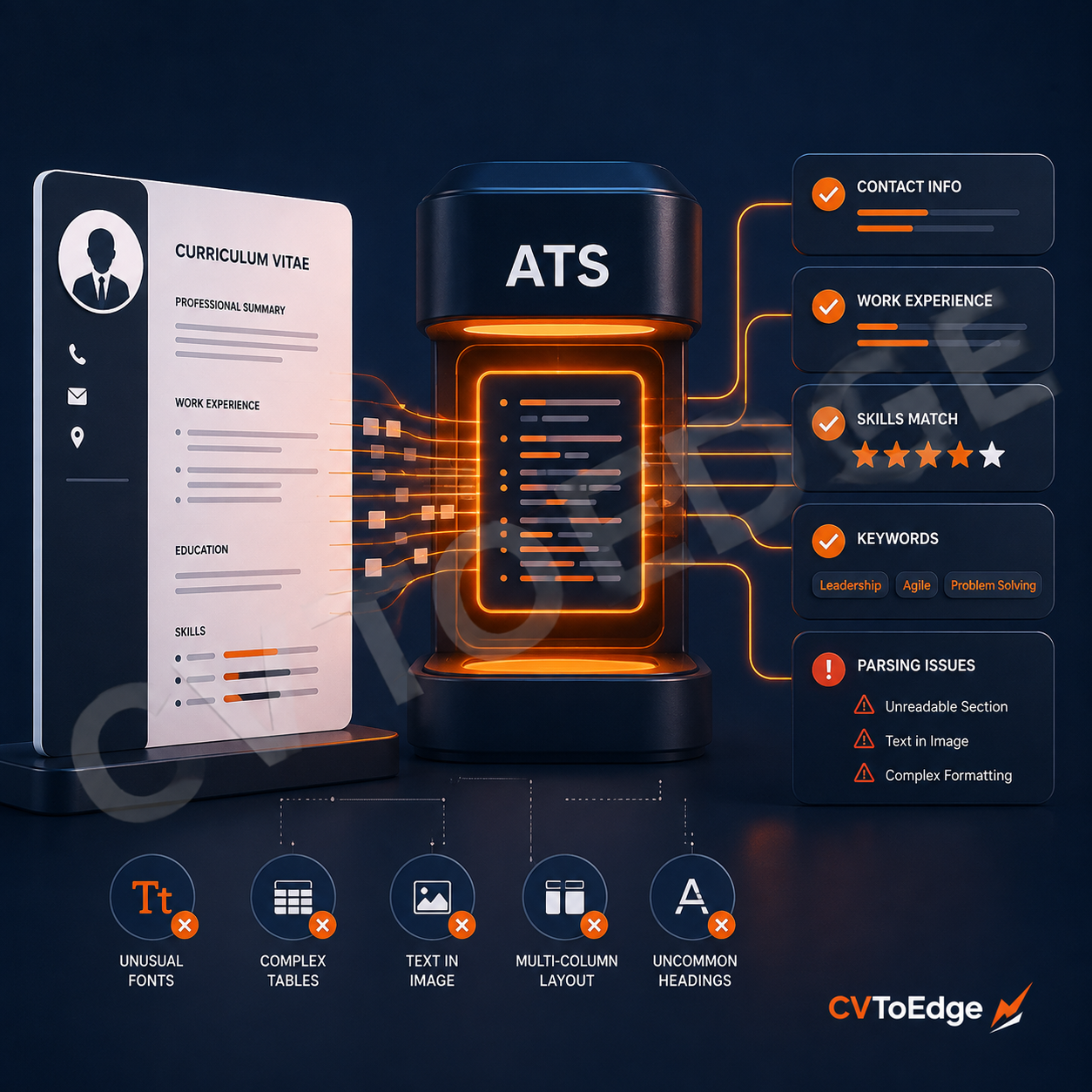
Even within creative industries, many large organizations use Applicant Tracking Systems (ATS) to screen applications.
If you're applying online through a corporate careers portal, a simple ATS-friendly CV may be the safer option.
Many designers maintain two versions of their CV:
An ATS-friendly version for online applications.
A visually creative version for direct applications, interviews, networking events, or portfolio submissions.
This approach offers the best of both worlds.
Creativity Should Support Communication
One of the biggest mistakes designers make is allowing creativity to overshadow usability.
Remember:
A recruiter should never struggle to find important information.
Good design improves communication.
Poor design hides it.
Ask yourself:
Is the layout easy to scan?
Can headings be identified quickly?
Is there sufficient white space?
Are fonts readable?
Is the information logically organised?
If the answer is yes, you're moving in the right direction.
Typography Matters More Than Fancy Graphics
Typography is one of the strongest indicators of design maturity.
Instead of using several decorative fonts, choose one or two professional typefaces and use them consistently.
Best Practices
Use a clear font hierarchy.
Maintain consistent spacing.
Limit font choices.
Ensure excellent readability.
Keep body text large enough to read comfortably.
Good typography often communicates professionalism more effectively than elaborate graphics.
Use Colour with Purpose
Colour can make a CV memorable—but only when used intentionally.
A restrained colour palette often has a greater impact than a rainbow of competing colours.
Good Uses of Colour
Section headings
Accent lines
Icons
Name and job title
Portfolio highlights
Avoid
Bright backgrounds
Excessive gradients
Neon colours
Poor colour contrast
Too many accent colours
A simple palette of two or three complementary colours is usually enough.
Showcase Your Personal Brand
Your CV should reflect your professional identity.
Ask yourself:
What kind of designer am I?
What style best represents my work?
What impression do I want employers to have?
A minimalist UI designer might create a clean, structured CV with generous white space.
A brand designer may incorporate subtle branding elements.
An illustrator may include tasteful custom icons or illustrations.
The design should align with your area of expertise.
Consistency strengthens your personal brand.
Let Your Portfolio Do the Heavy Lifting
Your CV introduces you.
Your portfolio proves your abilities.
Instead of trying to display every project within your CV, include a clear link or QR code directing recruiters to your portfolio.
Examples include:
Personal website
Behance profile
Dribbble profile
Adobe Portfolio
GitHub (for UI/UX or web designers)
Your portfolio should showcase:
Case studies
Design process
Final outcomes
Client work
Personal projects
Awards and recognitions
Recruiters often spend more time reviewing portfolios than CVs when hiring designers.
Focus on Results, Not Just Responsibilities
Creative employers want to know how your work created value.
Instead of listing tasks, describe outcomes.
Weak Example
Designed marketing materials.
Strong Example
Designed a digital campaign that increased customer engagement by 42% and generated over 150,000 impressions across social media platforms.
Another example:
Weak Example
Created website designs.
Strong Example
Redesigned the company website, improving user engagement by 35% and reducing bounce rates by 18%.
Numbers make achievements more credible and memorable.
Demonstrate Your Design Process
Many hiring managers care as much about how you think as they do about the final result.
When discussing projects, briefly explain:
The challenge
Your approach
The solution
The outcome
Example:
Redesigned the onboarding experience after conducting user interviews and usability testing, reducing user drop-off by 27%.
This demonstrates strategic thinking, not just visual skills.
Keep It ATS-Friendly When Necessary
Creative doesn't have to mean incompatible.
If you're applying through an online recruitment system:
Use standard section headings.
Avoid placing critical information inside graphics.
Don't rely on text embedded in images.
Use readable fonts.
Save as PDF only if accepted by the employer.
Follow submission instructions carefully.
Some employers may never see your beautifully designed CV if the ATS cannot read it.
Common Mistakes Designers Make
Even talented designers sometimes undermine their applications.
Overdesigning the Layout
If your CV resembles a poster rather than a professional document, recruiters may struggle to identify key information.
Prioritising Appearance Over Content
Beautiful design cannot compensate for weak experience or poorly written achievements.
Using Too Many Fonts
Consistency creates professionalism.
Excessive Colour Usage
Too many colours reduce visual hierarchy and distract from the content.
Ignoring White Space
Crowded layouts are difficult to read.
Forgetting the Employer
Design for the recruiter, not for yourself.
Your CV should communicate effectively before it impresses visually.
What Recruiters Really Notice
When reviewing creative CVs, employers often evaluate:
Visual hierarchy
Typography
Layout consistency
Attention to detail
Professional presentation
Communication skills
Brand awareness
Problem-solving ability
Relevance to the role
Surprisingly, many recruiters spend less time judging artistic flair than they do assessing whether the design improves readability.
Good design solves problems.
That's exactly what recruiters want to see.
Creative CV Checklist
Before sending your application, ask yourself:
✔ Does the design reflect my personal brand?
✔ Is the information easy to scan?
✔ Are typography and spacing consistent?
✔ Have I limited my colour palette?
✔ Is my portfolio clearly accessible?
✔ Have I quantified my achievements?
✔ Does the design support—not distract from—the content?
✔ Will the employer's recruitment process accept this format?
If you can answer "yes" to these questions, your creative CV is likely ready to make a strong impression.
Final Thoughts
A creative CV is an opportunity to demonstrate your design skills before you've even spoken to a recruiter. When done well, it communicates professionalism, creativity, and attention to detail in a way that a traditional CV cannot.
However, creativity should always serve a purpose. The most effective creative CVs are not the most colourful or unconventional—they are the ones that present information clearly while showcasing the candidate's unique design perspective.
Remember that your CV and portfolio work together. Your CV sparks interest, while your portfolio provides the evidence that you can deliver exceptional creative work.
If you're unsure whether your CV strikes the right balance between creativity and professionalism, CVToEdge can help. Our AI-powered platform analyzes your CV for readability, ATS compatibility, structure, and overall effectiveness, helping creative professionals build CVs that impress recruiters while remaining practical for today's hiring processes. Register & Subscribe today.