Tailoring your CV is not about changing who you are. It’s about presenting the most relevant version of your experience for a specific opportunity.
Most candidates don’t lose opportunities because they’re unqualified, they lose because their CV looks generic. Recruiters can spot a copy-and-paste CV in seconds. If your CV doesn’t directly reflect the job you’re applying for, it gets ignored. Tailoring your CV is not optional anymore; it’s the baseline.
Here’s the reality: every job description is a blueprint. If your CV doesn’t mirror that blueprint, you’re relying on luck instead of strategy.
Step 1: Deconstruct the Job Description
Start by reading the job posting like a recruiter, not a candidate. Extract three things:
Core responsibilities (what you’ll actually be doing)
Required skills (tools, technologies, competencies)
Keywords (specific terms repeated across the posting)
If a role mentions “data analysis,” “SQL,” and “reporting dashboards” multiple times, those are not suggestions, they are filters. Your CV must reflect them explicitly.
Step 2: Align Your Professional Summary
Your summary is prime real estate. Most people waste it with vague statements like “motivated and hardworking individual.”
Instead, make it role-specific:
Mention the job title you’re applying for
Highlight 2–3 directly relevant strengths
Include at least one keyword from the job description
Example shift:
Generic: “Results-driven professional with diverse experience.”
Tailored: “Data Analyst with 3+ years’ experience in SQL, data visualization, and building reporting dashboards for business insights.”
That difference alone can determine whether you pass the first screening.
Step 3: Reframe Your Work Experience
This is where most of the tailoring happens. Do not rewrite your entire history, optimize it.
For each role:
Prioritize achievements that match the job you’re applying for
Reorder bullet points so the most relevant ones come first
Use similar language to the job description
If the job emphasizes “cost reduction,” don’t just say:
“Managed operational processes.”
Say:
“Optimized operational processes, reducing costs by 18% over 6 months.”
Same experience. Completely different impact.
Step 4: Inject Keywords Naturally
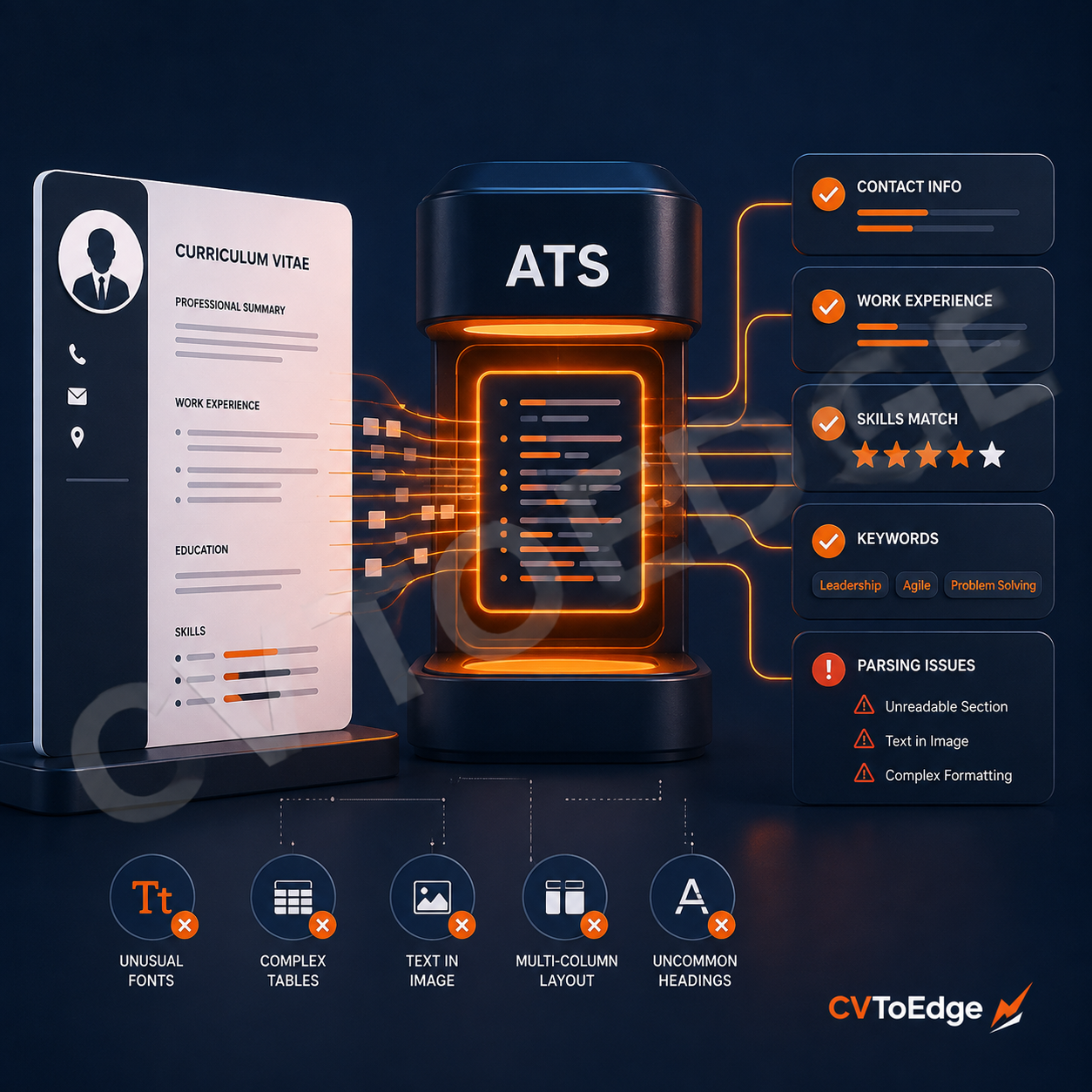
ATS systems don’t “understand” your CV, they match patterns. If your CV doesn’t contain the right keywords, it won’t rank.
But don’t keyword-stuff. Instead:
Integrate keywords into achievements and responsibilities
Use variations (e.g., “project management” and “managing projects”)
Include both hard and soft skills where relevant
Think alignment, not repetition.
Step 5: Customize Your Skills Section
Your skills section should not be static. It should evolve per application.
If a job prioritizes:
Tools (e.g., Excel, Python, Figma)
Methodologies (e.g., Agile, Scrum)
Soft skills (e.g., communication, leadership)
Then your skills section should reflect those priorities in that order.
This is a signal both for ATS and human reviewers.
Step 6: Adjust Formatting for Clarity and ATS
Even a well-tailored CV can fail if it’s poorly structured.
Avoid:
Tables
Graphics
Complex layouts
Use:
Clear headings (Work Experience, Skills, Education)
Simple bullet points
Standard fonts
Your CV should be machine-readable first, visually appealing second.
Step 7: Validate Before Sending
Before you apply, ask:
Does this CV clearly match the job description?
Would a recruiter see immediate alignment within 10 seconds?
Are the most relevant achievements impossible to miss?
If the answer is no, you’re not done.
Final Insight
Tailoring your CV is not about changing who you are. It’s about presenting the most relevant version of your experience for a specific opportunity.
A generic CV tells your story.
A tailored CV gets you interviews.
That distinction is what CVToEdge is built to solve, systematically, not manually. Refine your CV today.