A professional summary is a short paragraph, usually 3 to 5 lines, that introduces your professional background and strongest qualifications.
Your professional summary is usually the first part of your CV a recruiter reads.
It sits at the top of the page, right below your name and contact details. You have only a few lines to answer a simple question:
Why should I keep reading this CV?
A good summary gives the recruiter a quick picture of who you are, what you do, and what you bring to the role.
A weak one wastes that space.
What is a professional summary?
A professional summary is a short paragraph, usually 3 to 5 lines, that introduces your professional background and strongest qualifications.
It should give the recruiter enough context to understand your experience before they move into your work history.
For example:
Senior software engineer with 8+ years of experience building scalable web applications and APIs using Laravel, React, and Node.js. Experienced in designing backend systems, integrating third-party services, and leading development projects from planning through deployment.
Compare that with:
Hardworking and passionate professional with excellent communication skills and a strong desire to succeed. A team player who is always ready to learn and take on new challenges.
The first tells the recruiter what the candidate actually does. The second could describe almost anyone.
What should your professional summary contain?
A strong summary normally covers four things:
Your professional identity or job title
Your level of experience
Your strongest relevant skills
The value you can bring to the position
You don't need to mention everything you've ever done. Your summary is an introduction, not your entire career history.
1. Start with who you are professionally
Lead with a clear description of your profession.
Examples:
Marketing specialist
Senior software engineer
Financial analyst
Registered nurse
Project manager
Graphic designer
Human resources professional
Avoid vague openings such as "results-driven professional" or "highly motivated individual."
The recruiter already expects you to be professional. Your job title tells them much more.
2. Mention your experience
If you have several years of experience, say so.
For example:
Accountant with 7 years of experience managing financial reporting, budgeting, and account reconciliation.
If you're relatively new to your career, don't try to make your experience sound bigger than it is.
A recent graduate could write:
Computer science graduate with hands-on experience building web applications through academic projects and freelance development work.
That is more useful than simply saying "recent graduate seeking an opportunity."
3. Highlight relevant skills
Choose skills that actually matter for the job you're targeting.
If you're applying for a backend developer position, your summary might mention Laravel, PHP, PostgreSQL, REST APIs, or cloud infrastructure.
If you're applying for a financial analyst position, you might mention financial modelling, forecasting, Excel, and data analysis.
Don't turn the summary into a keyword dump. Pick the skills that support your strongest selling points.
4. Connect your experience to the job
This is where tailoring makes a difference.
Suppose you're applying for a customer success position. A generic summary might say:
Customer service professional with 5 years of experience supporting customers and resolving complaints.
A targeted version could say:
Customer service professional with 5 years of experience supporting SaaS customers, resolving technical issues, and improving customer retention. Experienced in managing high-volume support requests and working closely with product and engineering teams.
The second version gives the recruiter a reason to consider you for that specific position.
Keep it short
Your professional summary shouldn't take up half the first page.
Aim for around 3 to 5 lines or roughly 50 to 100 words.
Recruiters often scan CVs quickly. A compact summary makes your most relevant information easier to find.
If you need several paragraphs to explain yourself, the information probably belongs elsewhere in your CV.
Use evidence instead of empty claims
Words such as:
Hardworking
Motivated
Passionate
Dedicated
Results-oriented
Team player
Detail-oriented
aren't automatically bad, but they don't prove anything.
Instead of saying:
Results-oriented sales professional.
Try:
Sales professional with 6 years of experience managing B2B accounts and consistently exceeding quarterly revenue targets.
The second statement gives the recruiter something concrete to evaluate.
Tailor your summary for every important application
You don't necessarily need a completely different CV for every job, but your professional summary should reflect the position you're applying for.
Look at the job description.
What skills does the employer repeatedly mention? What type of experience do they want? What problems are they trying to solve?
Then bring your relevant experience to the front.
For example, if a job requires:
Team leadership
Project management
Agile development
React
Cloud infrastructure
and you have all five, don't lead your summary with an unrelated skill.
Put the experience that matches the role first.
Avoid these common mistakes
Making it too generic
Experienced professional seeking a challenging position in a reputable organization where I can utilize my skills.
This tells the recruiter almost nothing.
Writing your career objective instead
Your CV should focus more on what you bring to the employer than what you hope the employer gives you.
Instead of:
Seeking an opportunity to grow my career and develop my skills...
Show the experience and skills you already have.
Copying the job description
Using relevant keywords is useful, but copying entire phrases from the vacancy can make your summary sound unnatural.
Write for a human first. Include keywords where they genuinely describe your experience.
Making unsupported claims
Don't call yourself an "expert" in something you have barely used.
Your summary should make your CV more credible, not create claims that your experience section can't support.
A simple formula you can use
Try this structure:
[Job title] with [years of experience] in [area of expertise]. Experienced in [2 to 4 relevant skills or responsibilities], with a track record of [specific result, responsibility, or strength].
For example:
Digital marketing specialist with 5 years of experience developing campaigns for e-commerce brands. Experienced in SEO, paid advertising, email marketing, and content strategy, with a track record of increasing organic traffic and improving campaign conversion rates.
You don't have to follow this formula word for word. Use it as a starting point and make the final version sound like a real description of your career.
Your summary should make the recruiter want to read on
Think of the professional summary as your CV's opening argument.
It doesn't need to tell your whole story. It needs to establish your professional identity and quickly show why your experience is relevant.
Before submitting your CV, ask yourself:
Does the first sentence clearly say what I do?
Does it reflect my actual level of experience?
Does it mention skills relevant to this job?
Have I removed vague claims and unnecessary buzzwords?
Can a recruiter understand my value in a few seconds?
Does the rest of my CV support what I've said?
If the answer is yes, your summary is doing its job.
Build a stronger CV with CVToEdge
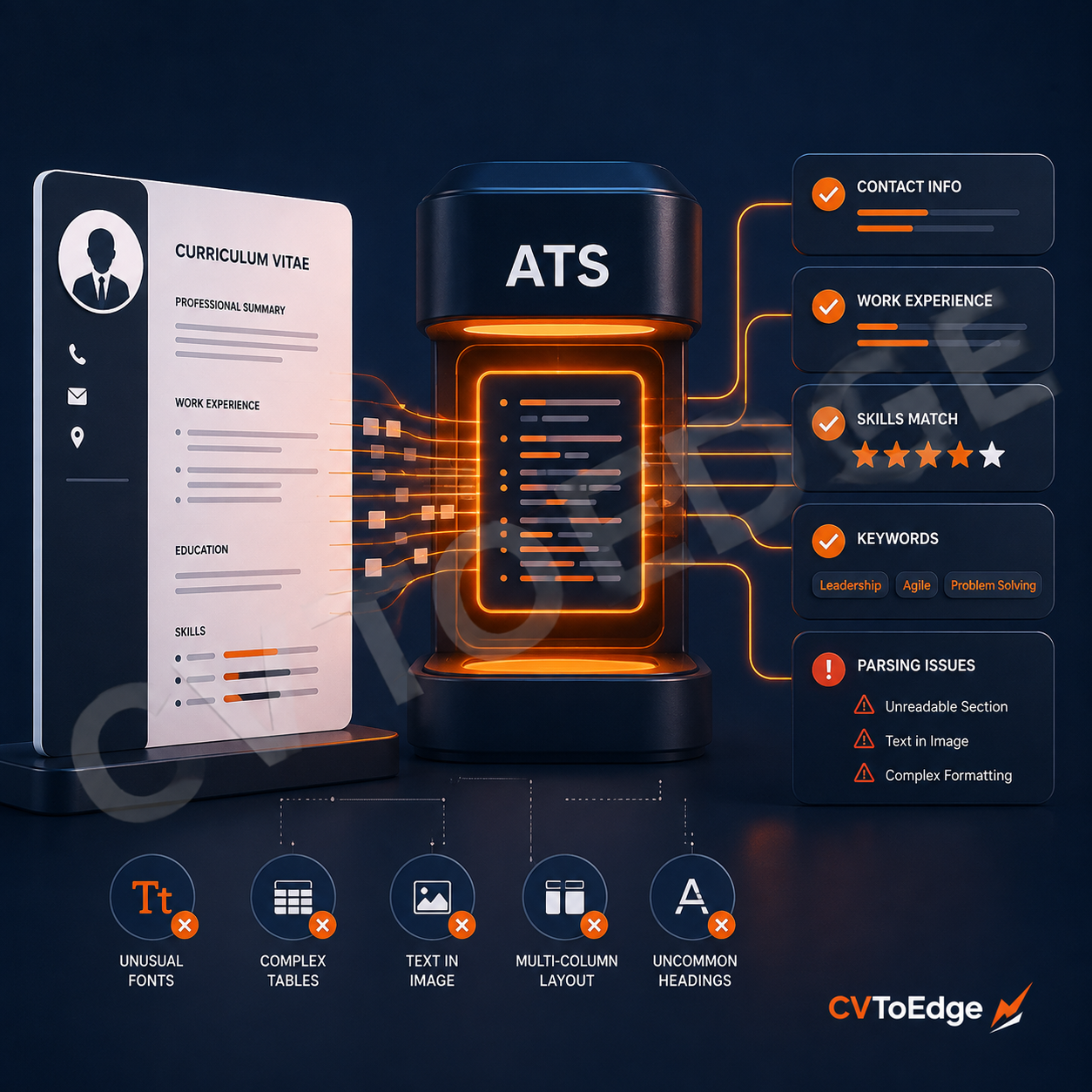
A strong professional summary is only one part of an effective CV. Your formatting, keywords, work experience, skills, and overall structure also affect how recruiters and applicant tracking systems evaluate your application.
CVToEdge helps job seekers create and improve professional, ATS-friendly CVs designed to give them a stronger chance of getting noticed. Register & Subscribe today.